
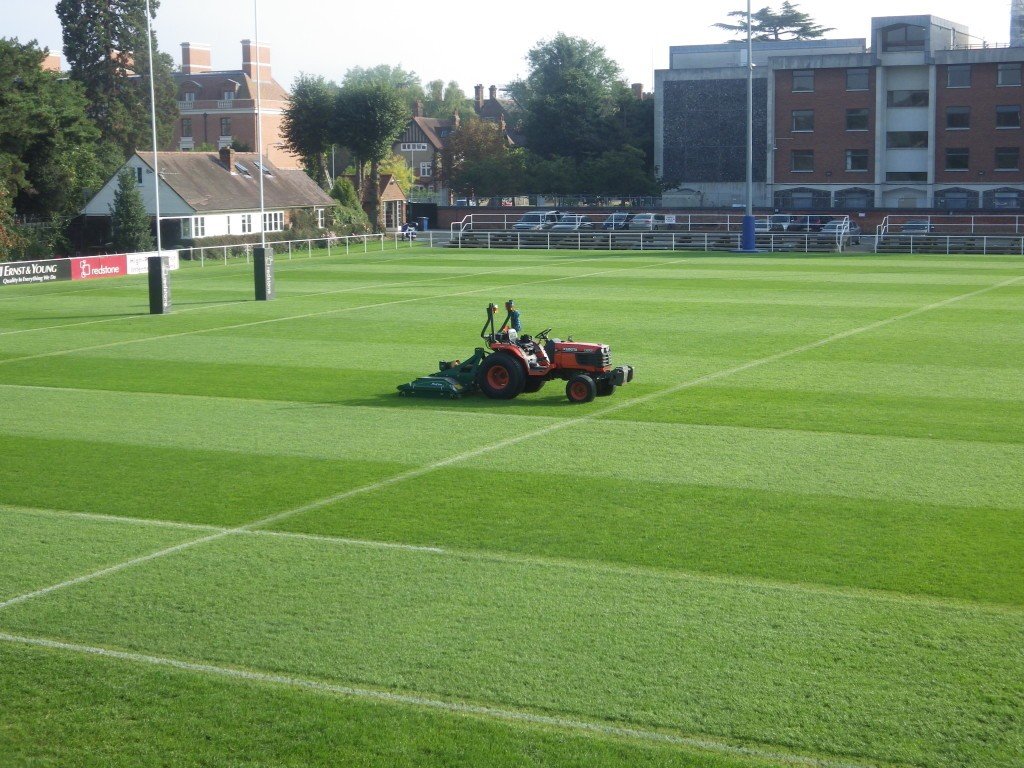
Cambridge University Rugby Union Football Club (CURUFC) has long cared for its pitches with great attention to detail. The club hosts up to ninety matches on its main pitch each year. That volume places heavy demands on cutting, dressing, and ongoing maintenance.
Grounds Manager David Hurst has served in groundcare roles for three decades. His team knew the value of a precise cut and dependable machinery, yet they had relied on traditional triple gang cylinder mowers for many years. A visit to Saltex changed that routine, David saw a roller mower from Wessex at the show. Dealers Pecks of Ely arranged a demonstration of the RMX 180 on site and he found the performance matched what the club needed.
This article explains why the RMX 180 has become part of the club’s toolkit. It covers performance, cost impact, maintenance, and operator experience. Where relevant, you will find links to related pages on the Wessex site that provide product details and supporting services.
What the RMX Delivers on Cambridge Pitches
The primary need at CURUFC was a finish that met strict pitch standards. The club must achieve a cut height between 1 inch and 1½ inches for both training and match days. The RMX 180 delivered that range reliably, including when grass was damp. That stability of cut quality matters on high use turf.
Mulching blades helped reduce the need for fertiliser. A drier climate in East Anglia increases nutrient loss. By shredding clippings finely, the ground retained more organic matter. The club reported savings on fertiliser of around £500 a year.
Time savings were also noteworthy. The shift from gang mowers to the RMX 180 cut down weekly mowing time by as much as a day. For a team covering main and training pitches multiple times weekly, that change freed labour for other tasks.
User Experience and Ease of Operation
David observed other groundsmen asking what machine produced the finish. The change from disbelief to conversation about the RMX demonstrates how performance can shift opinions in a practical setting.
Ease of use was a repeated theme in his feedback. The mower offered a straightforward control layout and predictable cut response. It fit the club’s existing tractor power unit, a 27hp Kubota, without strain. Fuel usage reduced as a result.
Minimal maintenance reduced downtime during peak season. David greases rollers weekly and sharpens blades with a grinder. That is most of the upkeep required. This contrasts with cylinder mowers that need more frequent blade servicing and alignment checks.
Why a Roller Mower Works for Pitch Maintenance
Pitch maintenance has tight tolerances for cut, striping, and surface condition. A roller mower, when well designed, gives a smooth finish that meets these standards. The RMX 180 uses full width rollers and high blade tip speeds to deliver clean cutting lines. Models across the groundcare machinery range share these core design principles.
A roller mower’s advantage comes from how grass lays after cutting. This affects drainage, traction, and visual appeal. On rugby and football pitches where players run at speed, surface consistency matters for safety and play quality. A quality cut supports these factors.
Cost Impact and Practical Savings
Investing in new machinery always prompts a cost comparison. At Cambridge, the RMX 180 came at about half the capital cost of comparable cylinder mower setups. That initial outlay difference was a clear financial benefit.
Ongoing running costs also matter. Fuel savings from the RMX were notable. Combined with reduced labour hours for cutting and less frequent servicing, total operating costs fell. Clubs and facilities with fixed maintenance budgets can find these outcomes useful when planning equipment updates.
Maintenance and Serviceability
A mower that sits idle costs more than one in use. The RMX 180 was designed with simple service points and accessible parts. Roller greasing and blade sharpening are routine tasks that a team can handle with basic tools.
The minimal number of moving parts reduces the likelihood of mechanical issues. If parts are needed, Wessex offers a range of genuine components that support long-term upkeep. This matters for facilities that expect a mower to remain in regular use across seasons.
Future Plans and Scalability
Cambridge University Rugby Club continues to review its needs. The team has mentioned the possibility of expanding to a larger tractor and a bigger tri‑deck mower for broader cut areas. For now, the RMX 180 meets current demands.
The broader RMX range covers other sizes and configurations if your needs change. For example, the rigid deck and tri‑deck variants support larger grounds or different tractor powers.
Practical Takeaways
You can expect the following from a mower like the RMX 180:
- Consistent turf finish that meets pitch maintenance standards.
- Reduced mowing hours for routine cutting.
- Lower fertiliser and fuel costs.
- Straightforward maintenance and service.
- Compatibility with compact tractors found on many grounds.
This performance profile applies across settings where cutting quality and labour optimisation are priorities.
If you want to find out whether the RMX 180 is right for your groundcare needs, contact the Wessex team for advice and product information. They can help you choose the right setup for your site and equipment.